The chapter by Monticelli in The Routlegde Handbook of Translation and Censorship (2025) tells the history of translation and censorship in the territory of modern Estonia from the first half of the 16th century to the end of the Soviet era in 1991, when censorship was finally abolished. The chapter reconstructs the specific features of censorship and its impact on translation activities and products in each period considered: the Swedish domination (until 1710) followed by the Russian Empire (1710–1918), the independent republic of Estonia (1918–1940) and Soviet Estonia (1940–1991). Particular attention is paid to the role of multilingualism, linguistic hierarchies and the struggle between different centers of power in shaping censorship institutions as well as the negotiations into which different cultural agents (translators, editors, publishers) entered in order to get their translations approved and published. At the end of the chapter some general proposals are made for a more comprehensive and complex understanding of censorship, translation and their relations in different historical and political circumstances. DOI.
You may also like

The paper explores the serialised novels and stories in the two leading Estonian daily newspapers, Päewaleht and Postimees, the majority of which […]
In 2023 and 2024, Daniele Monticelli and Kristiina Rebane published two articles that focus on Italian–Estonian literary contacts. Monticelli, Daniele; Rebane, Kristiina […]
The voluminous publication with 27 articles from the scholars in the Baltic states and Germany, but also Italy and Great Britain was […]
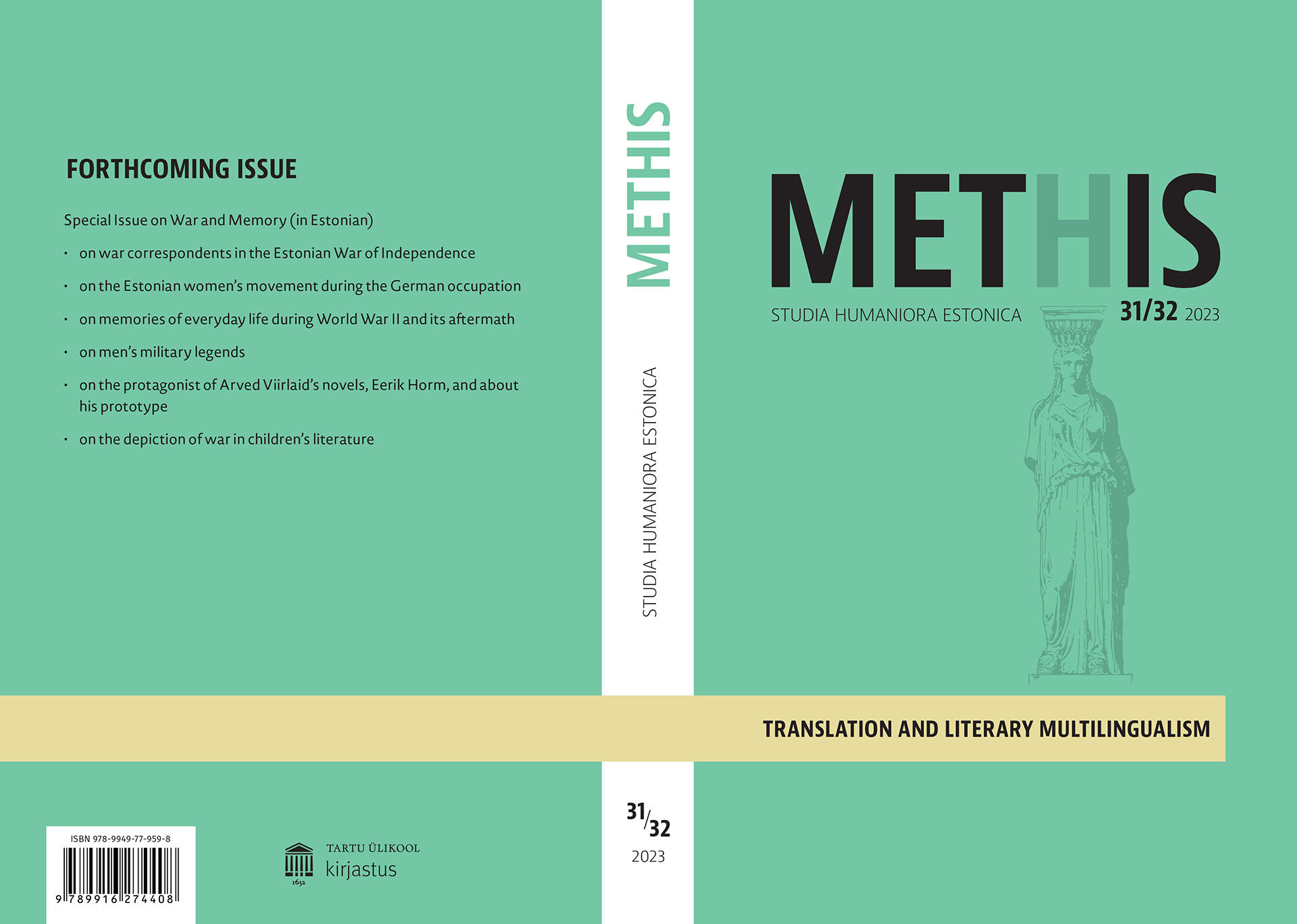
The special issue „Translation and Literary Multilingualism“, edited by Daniele Monticelli, Maris Saagpakk, and Anna Verschik, offers a wide range of views […]